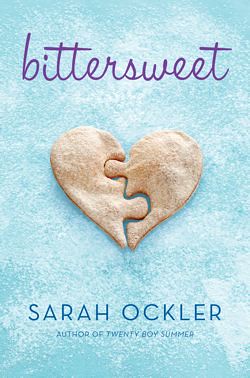
Sarah Ockler is one of our two guest mentors for our
July First Five Pages Workshop, which will be open for entries at noon on July 7th, so mark your calendars! Sarah is the bestselling author of
Bittersweet,
Fixing Delilah and the critically acclaimed
Twenty Boy Summer, a YALSA Teens' Top Ten nominee and IndieNext List pick. She is a championship cupcake eater, coffee drinker, night person, and bookworm. When she’s not writing or reading, Sarah enjoys taking pictures, hugging trees, and road-tripping through the country with her husband, Alex. Visit her
website or find her on
Twitter or
Facebook.
Getting Lost on the Road to Publication
by Sarah Ockler
Wherever you are in the publishing journey, you've probably figured
out that writing takes serious perseverance and patience (by which I
clearly mean drugs and alcohol. Just kidding. Mostly kidding.) I mean,
books don't just write themselves! *stamps foot*

By the time I wrapped up my first novel,
Twenty Boy Summer, I'd taken the word "commitment" to frightening new heights (there's a reason it's so close to "committed," because that's exactly what my husband wanted to do to me). I was
obsessed, writing every spare moment -- lunch hours, late nights, weekends when everyone else was having fun. It was an intense time because I knew that if I was going to succeed, I
had to make writing my number-one priority.
I don't regret it. I finished, landed an agent, and sold the book relatively quickly (something that still feels like a dream, even four years later). I always advise new writers to do the same -- make writing your top priority. But I've also realized that while I needed to push myself hard to overcome insecurities, naysayers, and a whole host of ready-made excuses, the write-every-spare-second method is not sustainable.
Art + Business = Burnout
Whether you're already published or still dreaming of ideas for your first book, once you decide to write for publication, the
art of writing becomes impossibly tangled with the
business of writing, and it changes things. Some of the pure joy of it fades; the shininess dulls. Not to say that being an author isn't rewarding and incredible, but it's challenging at every turn, fraught with rejection, self-doubt, publishing industry craziness, and straight-up writing overload.
Thing is, we're writers. We can't
not write. If I go more than a week without scribbling, I get cranky and start serving myself large quantities of Ben and Jerry's and/or white cheddar popcorn and/or Bombay Sapphire gin, sometimes all in the same bowl. So I realize that
not writing is
not an option. But taking small breaks
is an option --- a necessity, even.
Losing ItRecently, I'd noticed some serious burnout smoke coming from my head (it smells like burnt coffee and lightening, in case you were wondering) -- a sure sign it was time to get lost. So my husband and I planned a week-long trip to Rocky Mountain National Park.
I left my laptop behind. I had no internet. I paused all deadlines.

With my bestie husband, I took long, strenuous hikes up mountains. I rode a horse. I smelled trees and photographed wildlife. I explored alpine lakes and trails. I read books at night and ate homemade pie and chatted with the college interns working at the B&B where my husband and I got married (and where I wrote much of
Twenty Boy Summer). Yes, I jotted a few notes on paper when I felt creative, but I didn't work. I put plot and character development and marketing plans aside and let myself wander, physically and emotionally.
After a week in the mountains, when I found my way back and pulled my chair up to the keyboard, I was refreshed, energized, and absolutely ready to write again. Creativity lost, creativity found.
Travel a No-Go? 8 Ways to Get Lost in Your Own BackyardTraveling is a great way to escape and recharge, but you don't have to pack your bags to break from the stress of the writing biz. There are some great ways to get lost locally, even if you're short on funds or time. The important thing is to walk away from the page, and here are 8 ways to do it:
- Find a new writing spot. If you write at home, venture out to the park. If you're usually typing away at the bookstore, try the library or coffee shop, or buddy up and write at a friend's place. Even a short-term migration from the desk to the kitchen table counts -- just enough to change the scenery.
- Play tourist. Put on your walking shoes, get on your bike, or hop in the car or bus and sightsee your town as if it's your first visit. There are tons of things to experience in every place --- historical sites, restaurants, architecture, nature, local oddities. When was the last time you visited a museum, took a home and garden tour, drove down an unfamiliar street, or shopped on the other side of town? Inspiration often strikes in new places.
- Read a book. All the better if it's not your usual genre. How fun to go on an adventure with a character who hasn't been plaguing your mind and waking you up every night! Reading something amazing and unexpected always makes me want to be a better writer.
- Immerse yourself in non-writing creativity. Every try sketching or painting? What about putting together a recipe from scratch? Taking photos? Making up a song or rap? Don't be shy about droppin' dope rhymes in the privacy of your own home. Getting in touch with the other creative parts of your soul can boost your writing mojo.
- Wander off the info highway. The internet is awesome, but it's also a ginormous time suck, and it rewires our brains to be less original and creative. A few days sans email, social networking, and online gossip is like a cold shower for your mind.
- Mix up your playlist. Like music? Experiment with something totally whacky. Country lovers, check out acid jazz or ambient. Is classical your thing? Why not rap? Swap your easy listening for classic rock or indie stuff. Get lost in some new tunes and see where the music takes you!
- Reboot your writing routine. Do you only write between the hours of one and three, with Mercury in retrograde, the ambient temperature at 67.9 degrees, imported lavender incense burning, a mug of earl gray tea steaming near your left hand, and a purple-haired troll doll perched upon your keyboard? OMG, me too! But... what if you woke up in the middle of the night and wrote in bed? Ditched the laptop for some on-paper cursive writing? Shake things up in your writing life to break patterns, habits, and ruts and you might see things in a new way.
- Veg. Nothing wrong with a little R&R on the couch, remote in hand. Taking a nap is an awesome pastime, too. So is a hot bath. A long daydream. Sometimes you just need to turn off your brain and let the muse find you.

Writing is hard, often weighted with frustration, doubt, fear, anxiety, panic, and pure hatred for the written word (wow, first car on the emocoaster, anyone? Sit next to me and hold my hand!). Wandering off, even for a little while, can actually help you find your way back. And when you do return to the page, you'll be a better writer, excited and maybe even full of new ideas.
So get lost, dude!
Take a deep breath, turn off the computer, close the notebook, clear your mind, and go. Your creative soul will thank you. And your readers will, too.
 Now the official bio: Ellen Hopkins is the New York Times bestselling author of Crank, Burned, Impulse, Glass, and Identical. She lives in Carson City, Nevada, with her husband and son. Hopkin's MySpace and Facebook pages get thousands of hits from teens who claim Hopkins is the "only one who understands me", and she can be visited at ellenhopkins.com. You can also find here on Goodreads, blogging, or on Twitter.
 In your opinion, why is it important for teens (and other readers, for that matter) to have access to books that include controversial content (LGBTQ, sex, drugs, violence, bigotry, etc.)?
 Thanks, Ellen! How about a giveaway? Fill out the form below and leave a comment on this post to enter to win a copy of CRANK. Contest closes July 17th at midnight EST. U.S. residents are welcome to enter.