Thursday, 21 February 2013

Character Bucket List: Cecilia M. Robert and Ana Maria Tei from REAPER's NOVICE

Character Bucket list from Ana Maria Tei from REAPER’S NOVICE by Cecilia Robert

1. Keep my family’s souls off Grim’s hands.
2. Take one day at a time without panicking. Easier said than done especially if those soul snatchers keep popping around every corner.
3. Spend the summer in Venice with my best friend.
4. Book a VIP seat for the next David Garrett concert in Vienna. Gosh, have you seen this man play the violin? He is like the god of violins players! Plus he’s so gorgeous.
5. Learn to bake.
6. Get the henna tattoos on my hands retouched.
7. Learn to swim.


About the Book:
17- year- old Ana Maria Tei’s life has always been perfect: loving parents, good grades, and a future so bright it outshone the sun. But now words like “separation” and “divorce” are sending her world plummeting to hell. Determined to keep her family intact, Ana plans a family-bonding trip from Vienna to Tuscany. Except fate has other plans. Ana’s parents and siblings are killed in a car accident on their way to pick Ana up from school.

Enter Grim, aka Ernest. He promises to relinquish the four souls if Ana agrees to trade her soul for theirs and serve a lifetime as his novice. In order for Ana to graduate from her Reaper’s Novice station to a Soul Collector graduate, Grim puts her to test. To her horror, she finds out becoming a Reaper’s Novice didn’t happen by chance. It was preordained, and she is forced to make a choice: save her family’s souls or come to terms with who she really is and complete the task set for her.

Buy REAPER'S NOVICE on Amazon
Find REAPER'S NOVICE on Goodreads


About the Author: 

Cecilia Robert lives in Vienna with her two children, has an incurable obsession with books, anything romantic, TV and medieval architecture. When not working in her full time job, catching up with her two children, writing or reading, she can be found, knitting or crocheting, taking photos of old buildings.

Check out Cecilia’s blog
Like Cecilia on Facebook

Wednesday, 20 February 2013

WOW Wednesday: Rachel Caine on Making Mistakes

I will honestly tell you that when I started writing, I didn’t even know it was a potential career. It was just a thing. A thing I did, the way other people doodled on their Trapper Keepers in school … I wrote stories, and I hid them away. Very occasionally, I’d let someone read them, but not very often.

One of my teachers encouraged me to write, and told me that I might be able to get some stories published. In my high school flush of confidence, I fired off some hand-written efforts to one of my favorite magazines: The Magazine of Fantasy and Science Fiction.

Not surprisingly, these were returned with form rejection letters. I was crushed.

That began a process of learning that still continues to this day, because no matter how much you learn about the business of writing, you never, ever stop learning.

So. Let me cover a few of the mistakes I made, just so you can understand why you shouldn’t make them, too.

• Handwriting my stories. Yeah, this one is pretty obvious, but it’s important to start with it. You should, at the very least, use an old-school typewriter to create a readable manuscript – or, preferably if you’re not a hipster, just use the computer. Funny thing: the more you type, the better you get at composing at the keyboard versus writing longhand first. And the faster you type, which becomes important later.

• Not understanding the market. Simultaneous with my first mistake, I sent in a story that was horror to a magazine that says right in the title that it publishes Fantasy and Science Fiction. So do your research and send your story to the appropriate outlet.

• Craft, craft, craft. I wasn’t ready to be published. The stories were fundamentally flawed; I had a good grasp of grammar and spelling, but I didn’t know how to construct a story with a good beginning, middle and end … I was really writing a scene, not a story. So understand how to construct your story. Oh, and grammar and spelling are important. Yes, they are. Stop arguing.

Even with all those mistakes, the last story I submitted got a personal, handwritten rejection from Stuart David Schiff, and that was awesome.

Fast forward ten years. I learned my craft. I sought out people who could help me improve. I was ready to pursue professional publication of a novel. So what did I do wrong then?

• I didn't finish the book. This seems obvious in retrospect, but I honestly thought, since the submission guidelines for the publisher asked for a synopsis of the book and the first three chapters, that I didn’t need to have the entire thing written. WRONG. Finish the book, then sell it (in the beginning, anyway). The consequence was that when they offered to buy it, I didn’t have it written. And it wasn’t a good place to be.

• I didn’t follow standard manuscript formatting. I thought I did, honest, but I screwed up on little details … Like putting my full mailing address and phone on the front of the manuscript. That becomes important when the editor loses the cover letter and has no way to contact you. True story: she remembered I lived in Dallas and called information on the off chance she might find my number. She did. She bought the book. But it could so easily have gotten pitched in the trash!

• I didn’t get an agent. Now, an agent won’t necessarily be able to help you much on a first book anyway, if you’re genre, but it’s still a good idea to have one at your back if only to review the contract and commiserate with you on how bad it is. I didn’t have one. I got a very bad deal that I shouldn’t have accepted.

• I had no idea about marketing. Seems obvious now, but I thought that once I’d sold a book, I was DONE. Instead, I found that the book doesn’t sell itself, and the publisher wasn’t committing any marketing money to a new author … I would stand or fall on the sales of that first effort. Guess what? It didn’t go well. Spectacularly.

Still, my publisher liked me, and thought I could hit big, given enough time. But after five books, they regretfully informed me that it wasn’t happening, and they couldn’t buy anything else.

That’s right. I got fired. And truthfully, I still didn’t know what I was doing – I was writing without outlines, I wasn’t marketing properly, I wasn’t even writing what I was later good at doing. But I had an agent, which was good. Only after two more failed books for another publisher, my agent and I parted ways as well.

Back to square one. But at least this time, I kind of knew what I was doing. I got a new agent straight off. I came up with new concepts, submitted them properly, and when the first book as Rachel Caine came out (Ill Wind, if you’re keeping score at home) I devoted some real effort to promoting it. I’d learned a lot.

But what mistakes did I still make? So many. I cheaped out on DIY efforts instead of hiring professionals. I committed to too many things, once Rachel Caine started selling well. I rejected social media because I thought it was a distraction. Etc. It was a next level of problems.

One thing I’ve learned about the writing business is that it never stops giving you opportunities to make mistakes. But you know what? That’s a great thing. Mistakes help you grow, improve, and focus. Every error I’ve made resulted in a course correction of some kind.

I’m not saying those mistakes don’t hurt … they sting, a lot. My advice to is to take a deep breath and look them full in the face, and listen to what they’re telling you. Because a mistake is a fantastic teacher – maybe the best one of all.

Learn and grow stronger, young writer.

I’m screwing up right along with you.

By the way, I’ve still never managed to get published by The Magazine of Fantasy and Science Fiction. TRUE FACT.

Cheers,
Rachel Caine
www.rachelcaine.com
@rachelcaine

About the Author
Rachel Caine is the New York Times, USA Today and #1 internationally bestselling author of more than 30 novels, including the immensely popular Morganville Vampires series, the Weather Warden series, and the Outcast Season series.

In 2011, Rachel published the first novel of her new trilogy, The Revivalist Series, with the release of WORKING STIFF in August, followed by TWO WEEKS’ NOTICE in August, 2012.

She has been honored with a Paranormal Pearl Award and an RT Booklovers Award, and was recently awarded a Career Achievement Award from Romantic Times. Her first young adult novel, GLASS HOUSES, was chosen for the Texas Tayshas List in 2009.

Rachel has appeared as a guest at over 100 science fiction, fantasy, mystery and romance conventions and conferences over the past 20 years, including Dragon*Con, San Diego ComicCon, the World Fantasy Convention, and the World Science Fiction Convention. She has been featured in several national publications including People magazine, Entertainment Weekly, and Vanity Fair, as well as international, national and local television and radio.

She was born at White Sands Missile Range, New Mexico, attended Socorro High School in El Paso, Texas, and earned a bachelors degree in business administration from Texas Tech University. She’s worked in many jobs, including accounting, graphic designer, insurance investigation, corporate communications, and web design, to name just a few. She became a full time writer in 2010.

Rachel is married to award-winning fantasy artist R. Cat Conrad, and has two iguanas as pets: Popeye and Darwin.

Tuesday, 19 February 2013

Craft Post: Anna Collomore

Leaving Room for Inspiration/Creativity Within an Outline 
by Anna Collomore

The question of outlining in novel-writing is generally very polarizing. Some feel strongly that outlining hampers the creative process; otherwise swear it’s the necessary hand that holds ours through the duration of the first draft.

Initially of the former camp, I wrote my first novel according to scenes that popped into my head out of nowhere and voices that felt whispered from some divine source. I paid homage to the writing gods and waiting for emotion and inspiration to drive me. What I did not consider enough, however, is how to drive the novel—and I wound up deleting over one hundred meandering pages.

I have also experienced the opposite extreme. I once took on a work-for hire project that required me to write a novel based on a 40-page (single spaced) outline that someone else created for me. The outline was 1/3 the length of the novel and so detailed that it occasionally provided bits of dialogue. It enumerated everything from characters’ favorite breakfasts to their morning routes to school. It left zero room for creative freedom and perfectly illustrated the way in which an outline doesn’t always translate easily to the page. I deleted 50+ pages of awkward transitions that seemed A-okay in the outline itself but felt off when the characters finally came to life.

Now, though, I’m an outline convert. This is because I think I’ve hit on a happy median: a loose—or semi-planned—outline. In the “loose” outline, I give myself just enough direction to write a tight first draft and just enough freedom to play within the borders I’ve established. (This is also, incidentally, how I like to plan my life.)

A very simple model for a loose outline is as follows:

1.) Nail your concept.
2.) Create a 3-Act structure.
3.) Fill in emotional and plot beats.
4.) Jot notes/ideas/inspiration (as they come) within the 3-Act structure.
5.) Optional: create a chapter breakdown.

My most recent book, The Ruining, is a thriller about a nanny who is driven mad by her employer (who harbors a dark secret). I used a five-page outline (including vague chapter breakdown) to write The Ruining. It left me just enough creative freedom but also kept the process streamlined—I was able to write the first draft in two months and took another month to write a second, more solid draft. (During the second draft process I added approximately 75 pages to the first draft.)

The concept line I started with was this: Annie, a live-in nanny for a wealthy San Francisco family, is slowly driven mad by her nefarious employer—who holds a dark secret.

You DO need to know your concept in order to create an initial outline. You DO NOT need to have more than a few vague ideas about your plot. (For example, I did not yet know what the “dark secret” was going to be.) Your concept should clearly summarize the story you want to tell in one specific sentence. There is a very big difference between concept and topic/theme. So, “madness” cannot be a concept. Nor can “nannying” or “manipulation.” It can take some time to nail your concept—but it’s the hardest part. Once you have a concept, you already possess the general framework for a story.

The 3-Act structure:

A simple model for outlining a novel is to break your story into three parts. In Act I, something big happens that sets the novel in motion. Act II is the unfolding action—everything that results from the Big Moment in Act I. At the end of Act II, we have a major revelation or climax that leads into Act III: resolution.

So a very simple 3-act structure for my novel, The Ruining, would have been this:

Act I:
-open with Annie (protagonist) in her OLD LIFE (Detroit).
-Annie moves to NEW LIFE (San Francisco)—end on dramatic moment in which she is dazzled by her new “family’s” wealth, i.e. the first time she sees their sprawling mansion.

Act II:
-Annie starts job
-Annie bonds with Libby, the kids’ mom
-Annie meets love interest
-strange things start happening
-Annie is overworked, overwhelmed, stressed out
-Annie’s sanity starts to falter
-relationship with boy develops
-Annie runs into evidence that something is amiss. Rationalizes evidence.
-Libby finds out that Annie saw evidence.
-Libby becomes aggressively manipulative, controlling
-relationship with boy hits major stumbling block
-Libby acts worse, Annie loses her grip
-Annie fails out of school
-Annie has breakdown
-[SPOILER] Libby puts Annie in hospital
-Annie is trapped
-With love interest’s help, Annie solves mystery behind Libby’s malice

Act III:
-consequences for Libby
-Annie’s resolution/reconciliation with boyfriend

As you can see, this is virtually unplotted—but it provides a general arc for getting started. As I wrote the first act, which I had envisioned clearly (and is generally very short—no more than 30 pages), ideas for the second act came to mind. (“Annie bonds with Libby,” for example, came to life in the form of Libby giving Annie some designer hand-me-downs and taking an interest in her college major.)

Later, you can add more character and plot details to your outline, which should ultimately serve as a place for structuring your notes and ideas into usable form. So if you have an idea for the way “Annie meets love interest,” write it in. (I.e. Annie wipes out on pool patio and cute next door neighbor rushes to her aid.) It then unfolds into a scene.

Your initial outline may be even less detailed than the above. It may use placeholder terms such as, “big emotional moment” or “clue is revealed.” You may not stumble across the exact nature of that moment or that clue until after you’ve written a chapter or two—but you’ll know exactly when in your draft you should be hitting these points, because you’ll be able to see clearly (via the outline) where the action picks up and slows. And you’ll know to build toward big moments from the beginning. These important structural and emotional “beats” in your novel will keep you from going off on tangents that seems fascinating at the time but stretch for 30 pages and ultimately derail your plot.

You need not know the ending right away. You don’t need to know whether the girl ends up with the boy or whether the con artist gets caught and sent to jail. You only need a very rough idea of what questions ought to be answered—and then you can keep these in mind as you write. For example, a later version of my outline (actually was served as my final version) contained an Act III that looked like this:

What’s going on? Is it possible she imagined the entire thing?

The ending is decidedly ambiguous, leaving readers wondering whether Annie will ever be released and reunited with Owen. What’s more, it’s not clear whether Annie is truly insane. Is the story of Libby’s dark secret the truth? Or is it the wildest of Annie’s delusions?

I clearly did not have these questions answered for myself—and yet I had a point to work toward and questions to address within the text. (Incidentally, loose-outlining is not risk-free! I wound up writing three separate endings before my editor was happy.) A loose outline is like a map: it guides you to the point you eventually want to reach and keeps you from veering off track. But what you’ll discover along the way? That comes later, and that’s the fun of it.


About the Author

Anna Collomore--a devotee of dairy products, small mammals, and thrift stores--is a former book editor from New York City. Now she lives, writes, and au pairs in Paris. Find out more about Anna and The Ruining at www.annacollomore.com.


About The Ruining

Annie Phillips is thrilled to leave her past behind and begin a shiny new life on Belvedere Island, as a nanny for the picture-perfect Cohen family. In no time at all, she falls in love with the Cohens, especially with Libby, the beautiful young matriarch of the family. Life is better than she ever imagined. She even finds romance with the boy next door.

All too soon cracks appear in Annie's seemingly perfect world. She's blamed for mistakes she doesn't remember making. Her bedroom door comes unhinged, and she feels like she's always being watched. Libby, who once felt like a big sister, is suddenly cold and unforgiving. As she struggles to keep up with the demands of her new life, Annie's fear gives way to frightening hallucinations. Is she tumbling into madness, or is something sinister at play?

The Ruining is a complex ride through first love, chilling manipulation, and the terrifying depths of insanity.

Buy The Ruining at Amazon
Find The Ruining on Goodreads

Monday, 18 February 2013

Inspired Openings: Special Agent Edition

We asked the Agent Judges for the Pitch+250 Contest, plus additional select agents, to tell us what they love and hate to see in a novel opening. Thank you to all the agents who generously took the time to give us quotes for the post.


Sarah LaPolla, Curtis Brown Ltd.

To me, a good opening is one that takes me by surprise. First lines are important to me. I particularly like when they’re quirky in nature or just beautifully written. Something about the beginning of a novel needs to draw me in, whether the writing style, the main character’s voice, or an interesting hint at the plot to come. Beyond the clichés of “don’t begin the main character waking up,” there are beginnings to novels that make me bored or hesitant to continue. The first is dialogue. It would need to be pretty special dialogue for your reader to trust this opening. Beginning with dialogue, to me, asks a lot from your reader. It’s forcing them to hear from a character they don’t know yet. The other pet peeve of mine is beginning a novel with the weather or setting. These introductions can be very well-written, but they essentially say nothing. Unless the storm that’s brewing eventually leads to the main character’s death, I don’t need to hear about it first. Beginnings of novels should be about making a reader feel something before the story even begins. Being excited about where a book will lead me or who I’m about to meet is one of my favorite things about being an agent, and being a reader.


Jordy Albert, The Booker Albert Literary Agency


What I don't like seeing in an opening: Too many times I've come across an opening that describes the sky. and they were all described very similarly.

What I love to see: A strong hook, and opening lines that do a fantastic job at setting up the setting and introducing the characters. I look for openings that draw me into the story and keep me reading.

Added from the comments: I very much agree (and would like to add to what I had already mentioned) that I'm often dismayed when I come across a manuscript that begins with a dream, flashback, or something similar. It can become very tedious to read so many similar submissions.


Pooja Menon, Kimberley Cameron & Associates

NEVER open your scene with:
1) The mundane. In a YA novel, that would be our main character waking up in the morning, noon, or night, either because she or he could not sleep, or because of some sort of a nightmare. I think it's a waste of time to begin with such a scene, which eventually leads to the character contemplating some strand of her/her life. Anything that is mundane bogs the manuscript down, and definitely should not be the first thing an agent or editor sees. Sets the tone for the rest of the story.
2) With a dream. I've seen so many of these openings, and I don't see the point in it. Not unless the dream has a major role to play in the story. Even then, I would rather it came later.

What I love:
1) Quirky first lines that startles me and introduces me to the character at the same time.

2) The character thrown right into a scene of action (mind you, not a monumental scene of action, but an important one that leads up to the monumental one at some point- this requires a certain amount of build-up, so I can be invested when it happens). Such an introduction sets the tone of the story and gives us the lowdown of the character's immediate problem with the least amount of exposition.


Jennifer Udden, Donald Maass Literary Agency

What I like: Openings that immediately bring me into the world of the protagonist--whether or not the protagonist is present yet.

What I hate: Cliched openings- the protagonist waking up, from a dream, then going into the bathroom and describing themselves in the mirror. This happens more often than you'd think!

What I get excited about: Opening lines that give me chills, that make me eager to read the rest of the book, even if it's only a five page sample!


Kent Wolf, Lippincott Massie McQuilken 

What I love most about a great YA/MG opening is the sense that I'm in very capable hands. When you write with assurance--capturing voice, creating atmosphere, crafting authentic dialogue--I'm more likely to turn the page. On average I receive over 50 YA/MG queries a week, so it's important to be submitting the most finely honed work possible, and that includes your query letter. The more well-crafted the query (I prefer queries that expertly mimic what you'd find in jacket copy), the more I'm prone to request a partial or full.


Natalie Lakosil, Bradford Literary

I love to see voice introduced with the first line; when I’m surprised, I sit up and take notice. I hate when first lines don’t set up anything at all – in other words, I hate wallpaper first lines (lines that just blend in to the surrounding narrative without any pizzazz).


Suzie Townsend, New Leaf Literary


In opening pages of a book, I love to see anything that is going to make me sit up and pay attention. For me that generally means the voice has to have something in it that stands out right from the start. One of my favorite openings is Josh Bazell's in Beat the Reaper. Just reading those first few lines told me who that character was, and underneath was an unwritten promise that if I followed him and his story, it would be interesting.

I would also say there's an art to opening a book. Getting into the middle of things so that even the first line is gripping, giving and withholding the right amounts of information so that the reader will be invested in the characters but wondering what is going to happen.

A great example of this is in Gillian Flynn's Gone Girl. When the cops are surveying the scene and asking Nick questions about Amy's disappearance, he answers a number of them and then says something to the affect of, "That was the fifth lie I'd told," and right there I was hooked. I had to know what the other lies were, what he wasn't telling us, and what that meant in terms of the plot.


Emily Keyes, L. Perkins Agency 

A strong opening shows me that I haven't read this book yet, and makes me want to keep reading further. It gets to the point, and doesn't take too long to introduce conflict and interesting characters. I love a sense of humor that gives a sense of the tone a voice of the main character. I hate an opening that begins at the wrong place, or takes too long to get to the meat of the story. I particularly dislike opening with a dream sequence or a character waking up and getting ready for the day.


Michelle Johnson, Inklings Literary 

What I love to see in a novel opening? - I love to be pulled into the main character immediately. Give me something to identify with and a character I feel for and love and I'll be hooked all the way through. Also, I love a good hook line that makes me laugh. Humor throughout a book, no matter how serious or dark the subject matter, always makes me sit up and take notice.

What I dread seeing in a novel opening? - The usual cliches - A character just waking up. A character waking up and looking in the mirror and using that to describe the character. A group of characters all introduced at the same time. A dream sequence.


John Cusick, Greenhouse Literary 

An opening should grab our attention, be shocking, intriguing— or preferably both! Neil Gaiman’s The Graveyard Book kicks off with a life-and-death situation: “There was a hand in the darkness, and it held a knife.” It sets a creepy, gothic tone, while drawing us into the action. An intriguing first line can juxtapose apparently contradictory ideas. Libba Bray’s Going Bovine opens, “The best day of my life happened when I was fine and I almost died at Disney World.” How could the best day of your life be the day you almost died, and how could that happen at Disney World, of all places? The question seizes our interest, and compels us to keep reading. In both examples, the reader wants to discover more, what happens next. Plain and simple: your opening should drive us to keep reading.


Andrea Somberg, Harvey Klinger, Inc. 

I know that openings cause a lot of anxiety for writers - how do you make an impression and get the essence of your novel across in just a few paragraphs?! Some things I look for/look out for: Cliches are a huge warning sign, as is too much telling within the first few paragraphs. Also, prologues are often problematic, so if it's possible to avoid one, definitely do! What is is that makes me sit up and take notice? The most important thing for me is narrative voice - is it engaging? Is it unique? Does it immediately draw me in? This is extremely important -- and if the writer is good, the narrative voice will remain consistent throughout the novel. Unfortunately (or, fortunately, depending on how you look at it!), whether a narrative voice resonates is a highly subjective thing.


Alyssa Henkin, Trident Media Group 

For me, the opening is about being drawn into the story. Strong openings establish an emotional connection to the character(s) and give the reader a reason to care without dumping tons of back-story or description. I can fall in love with an atmospheric setting, with good writing, or great characters, but voice is omnipotent.


Amy Boggs, Donald Maass Literary Agency 

At the most basic level, what I love in a opening is connecting with the main character in a meaningful way that also demonstrates the uniqueness of themselves or their situation. What I hate to see in openings is when that doesn't happen.
Not a very helpful answer, but the most honest I can give. I could say that I hate opening with prologues, dreams, waking up, traveling, or those openings that try to trick the reader (like opening with a big battle scene, but oh wait, turns out that battle was just a video game the protagonist is playing). All of this is true, except when someone very talented and savvy manages to do them right. I am a big believer in breaking rules, if you can pull it off. So stripping an opening to the most basic elements, it comes down to that connection and that uniqueness.

I tend to refer to this as the balance between the familiar and the unexpected. Think of Beethoven's fifth symphony. Those first four notes are strikingly recognizable, but the first three are the same. It's the fourth, that unexpected changeup, that catches your attention.

In a more literary example, consider these two opening sentences:
1. "I sat slumped on the sofa, my eyes glazed over from boredom as I watched real housewives yelling at each other on the TV."

2. "I sat slumped in the passenger seat, my eyes glazed over from boredom as I watched my mom set fire to the body."

Which makes you want to read the next sentence? My bet is on #2. Both have the same style, voice, and level of skill. Both have the same emotion, one most readers will be very familiar with. The difference is in the situation. The first sentence will make the reader think, "Yeah, I know those feels." The second, "Yeah, I know those fee--wait, what?"
This is not to say that all openings have to involve setting someone on fire. But no matter how ordinary your protagonist and their life is, there should be a little something out of the ordinary to pique the reader's interest. The reader opened your book because they were curious. Make them curiouser.


Jenny Goloboy, Red Sofa Literary 

When I request a manuscript, it's because the query letter indicates an appealingprotagonist facing a difficult challenge, and I want to know more. So how do I lose interest?

Some serious problems:

1. The story starts in the wrong place.
The protagonist's crisis is presented in the query letter—but the first chapter isn't really about that. And it's clear we're not going to get to the meat of the issue for some time. Ex: If the story starts with the protagonist waking up and going through his “normal” routine, you've lost my interest by the time he starts brushing his teeth.
2. The protagonist is interesting, but no one else is.
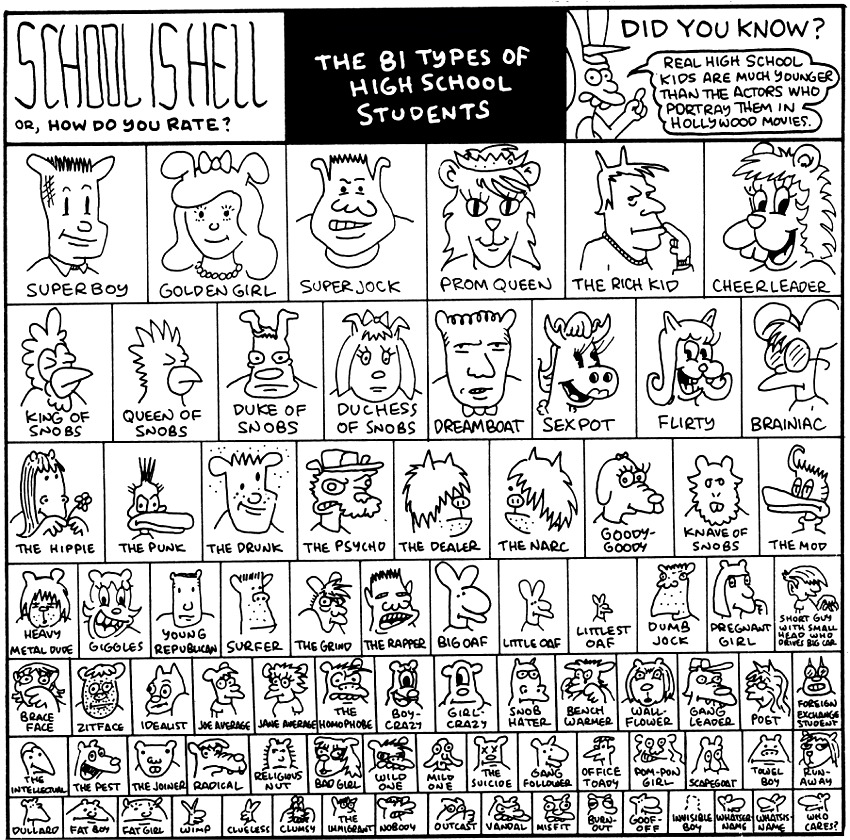
Lots of flat characters-- lots of characters who are exactly who they appear to be. For some reason, this is a problem I see a lot in YA submissions: schools populated by Prom Queens, Evil Jocks, and the rest of Matt Groening's 81 Types of High School Students.

Think: is your Brainy Girl as distinctive as Hermione Granger?

3. The transition from the real world to the fantasy world is ineffective.

Many YA novels have their heroes discover that there's a secret fantasy world, which is much more engaging than the "real" world. The problem with this type of transition is the lack of authenticity in the fantasy realm, let alone a well-thought-out setting that’s equally as plausible as the real world.

What traits in your sample chapters will result in the request of a full manuscript?
Some good signs:
1. I need to find out what happens to your hero, RIGHT NOW

Successfully make it possible for readers to identify with the book’s characters, in addition to structuring a story and ending chapters in a way that forces readers to keep moving forward. These are two separate, valuable skills.

2. It’s evident that the “world” is going to grow

There will be hints of back story that I want to see fleshed out, there will be characters who retain levels of mystery that I want to see resolved, or the overall sense that there is a whole society beyond the places we've all visited.
3. I like your sense of humor.


Erin Harris, Folio Literary Management

As a literary agent, I’ve had the opportunity to read my fair share of book openings. When an author queries me, I ask her to include the first ten pages of her manuscript. These ten pages are crucial territory, because they tell me, almost immediately, whether or not to pursue her work. Your book’s opening is its way of introducing itself. It’s the handshake at the beginning of an interview. You definitely want it to make a good first impression.
As you set about trying to write the kind of opening that will pique an agent’s interest, it’s important not to forget the basics. The opening pages should establish the basic premise of the story and introduce the major themes. Theyshould also be chock full of “establishing details”— the basic Who, What, Where, When, and Why of the book.
This may sound simple, but you’d be surprised how many writers neglect to ground their readers at the outset!
Once you’ve established these basic points, you want to make sure that you’ve written something engaging, an opening that will create an overwhelming desire in the agent to read more. I personally love novels that begin with an intriguing conflict or mystery that I can’t wait to see play out over the course of the book.
I’m also likely to want to keep reading a novel with a compelling narrative voice. It’s crucial to find the right storyteller for your story—think of the ultimate narrator as a captivating traveling companion. The reader must want to listen to this personfor the entire journey of the book.
I also love books that are set against the backdrop of another time, place, or culture – real or imagined.Whether realistic, speculative, or fantastical, it’s crucial to explain the “rules” or “logic” of thebook’s fictional universe in the opening. For instance, what is the hierarchy of a certain school, family, pack of wolves?
Finally, because publishing is also a business, I like to see an opening that gives me a sense of how the book plans to differentiate itself from others on the market. If it’s a book that deals with a popular subject matter or genre, the opening really needs to show me how the book will make a unique impact on editors.


Laura Biagi, Jean V. Naggar Literary
There are two qualities I love in novel openings: 1) something unexpected, 2) the establishment of voice. What I mean by unexpected doesn't necessarily have to do with the subject matter, though. No car crashes, sad clowns, or man-eating turtles will achieve what I mean if the unexpectedness isn't part of the writing itself and how the opening sentences are structured. One of our agency books I adore is the YA book Amber House by Kelly Moore, Tucker Reed, and Larkin Reed (Arthur A. Levine Books, October 2012). Chapter One opens, "I was almost sixteen the first time my grandmother died." Initially the sentence lured me into thinking I would be reading something rather normal, but then "first time" appeared, grabbing my attention. The structure creates the surprise. If the sentence had led with "first time," as in "The first time my grandmother died, I was almost sixteen," it wouldn't have been quite as effective. This sentence also successfully establishes voice. The main character directly addresses the reader with authority and honesty, confessing something to the reader that also raises the reader's curiosity: how exactly could this grandmother have died a first time?
Problematic openings often fail to show me within the first page why I as a reader should care about a character or scene. What makes this character or scene so intriguing, so stand-out that a whole novel can grow from its foundation? I also get tipped off that the writing may not be as strong as I'd like when there is an excessive number of adjectives and adverbs in the opening sentences. These words signal to me that the author is trying to force images onto the reader, but unfortunately excessive adjectives and adverbs often create too many images to focus on at once, preventing the reader from getting anything out of the scene. Verbs and nouns are stronger--they anchor a sentence--and so if you can find a way to describe a particular image, action, character, etc. by removing as many adjectives and adverbs as possible, you will likely create a more vivid opening.

Sunday, 17 February 2013

Announcing the Semi-Finalists for the Pitch+250 Contest

We received some amazing submissions for the contest, and narrowing them down to the top 25 was incredibly difficult. The Round 1 Judges raved about how excellent the entries were!

Congratulations to all of the Semi-Finalists!!!

A Song in Winter - Kate Michael
Awake - Minerva Vasquez
Beanblossom Versus Bombastic Bandits - Tessa Devan
Beatrice and the Legend of the Turtle Fountain - Tiffany Parks
Becoming Jinn - Lori A. Goldstein
Blackrock - Kendal Muse
Dorkboy - Nicola Call
Fireproof - Lauren C. Teffeau
Gripped - Laurie Litwin
Harold - The Kid Who Ruined My Life and Saved the Day - Dana Edwards
Liar's Chair - Matthew Stern
Magical Me - Heather Faesy
Meditation - Larissa Hardesty
Our Souls To Keep - Gary Caruso
Over the Deep Fried Rainbow - Leslie S. Rose
Reaper - Ava Jae
Starwisp - Rebecca Harwell
The Grave Clothes Laundress - Talynn Lynn
The Only One - Keely Dunn
The Sidewalk's Regrets - Kate Larkindale
The Snake and the Darkness - Mari Clark
The Thirteenth Subject - Krystal Marquis
This Side of Heaven -Kara Laughlin
True as Steel - Dianna Winget
Truly and Forever - Jana Hutcheson


A million thanks to all of our fabulous judges!!


Round 1 Judges - Brilliant Bloggers, Authors, Editors, and Agent Interns


Stina Lindenblatt - Stina Lindenblatt is a mother of three, an adoring wife, a photographer. She's also a fiction writer who's addicted to YA and NA (New Adult) novels, chocolate, and exercise. She's a member of the RWA and SCBWI, and a contributing member of the Querytracker.net Blog.
Stina's blog
Stina's Twitter 


Kat Ellis - Kat Ellis writes YA sci fi and fantasy, which has so far included: hot dragon boys, giant squid, drug abuse, robots, little people in trilby hats, winged aliens, shuttle crashes, kissiness, evil moths and malicious vomiting. She talks about pretty much all of those things on this blog. She's represented by Molly Ker Hawn of The Bent Agency.
Kat's blog
Kat's Twitter


Vivian Lee Mahoney - Vivian Mahoney writes books about rebels. She's also a postergirlz for readergirlz, a literary advisory group for teens. Who knew going back to the teenage years would be so rewarding?
Vivian's blog
Vivian's Twitter


Sheri Larsen - Sheri Larsen is a YA/MG/PB author repped by Paula Munier of Talcott Notch Literary. A published freelance/short story writer of numerous community interest articles; children's articles HE DREAMS IN GOLD (June 2012), MARTIAL ARTS ARE ALL IN THE FAMILY (Aug. 2012), IT'S ALL ABOUT COMBINED LEARNING (Aug. 2012), FOR LOVE OF THE FIGHT (Aug. 2012) published in Martial Arts Magazine; short story 'HIS SHIRT' in Daily Flash Fiction Anthology 2012 published by Pill Hill Press; vignette 'Tape Recorder' in The Best of Vine Leaves Literary Journal 2012 published by eMergent Publishing.
Sheri's blog
Sheri's Twitter


Carol Riggs - Carol Riggs is a YA writer represented by the fantastic Kelly Sonnack of the Andrea Brown Literary Agency. She is also a member of SCBWI, and has a degree in Studio Arts. She's a Christian who lives in Magalia, California with her hubby.
Carol's blog
Carol's Twitter


Susan Sipal - Susan Sipal is published in both fiction and nonfiction but is perhaps best known as an analyst of the Harry Potter series. Over the last several years, she has developed and presented A Writer's Guide to Harry Potter, which helps writers of all genres improve their craft with Harry Potter as their text. She has worked in the industry for many years as an editor and marketing consultant for both small traditional publishers as well as electronic. Now she is happily editing for Musa Publishing in their YA line, Euterpe.
Susan's blog
Susan's Twitter


Lydia Sharp - Lydia Sharp is an author of young adult contemporary, fantasy, and romance. She has been dedicated to helping fiction writers improve their storytelling skills through her own blog (since 2009), at the award-winning Writer Unboxed blog (since 2010), and at the Write It Sideways blog (since 2012). Laughing is her favorite pastime. Kissing is a close second.
Lydia's blog
Lydia's Twitter


Dee Romito - Dee Romito loves to explore education, parenting, and writing. She has two beautiful children who inspire her and remind her how exciting it can be to learn and discover. She is a New York State certified teacher, PreK-6, and has mainly taught grades three through five. She also does freelance writing for educational companies and writes Middle Grade fiction. She is represented by the amazing Kerry Sparks of the Levine Greenberg Literary Agency.
Dee's Blog
Dee's Twitter


Tonya Kuper - Tonya Kuper is a YA writer rep'd by Nicole Resciniti, she is also the Promotions Manager at The Seymour Agency, and a literary intern for Marisa Cleveland. She's a contributor at YA Stands & All the Write Notes.
Tonya's blog
Tonya's Twitter


Lisa Gail Green - Lisa Gail Green writes paranormal and fantasy. She is a generous and brilliant contributor at the First Five Pages Workshop. Look for the first novel in her DJINN series, THE BINDING STONE, available this April! She would most definitely have a werewolf for a pet if she weren't allergic.
Lisa's blog
Lisa's Twitter

Saturday, 16 February 2013

This Week for Writers 2/16/13

Getting Published

5 Hilarious Reasons Publishers Rejected Classic Best-Sellers
from The Passive Voice - Latest Updates

The Modifier Zone Redux
from Hey, There's A Dead Guy in the Living Room

The Self-Publishing Stigma – is it really gone?
from Author Marketing Experts, Inc. » BLOG

Piñatas and Other Rejection Fun
from Operation Awesome

Love Scene Workshop ... critiques by Summer Heacock
from Brenda Drake . . . under the influence of coffe

8 Ways to Be a Happy Author
from Rachelle Gardner

Recipe for a Successful Synopsis
from Jami Gold, Paranormal Author

Is Your Agent an Asset?
from Behler Blog

Query Diaries
from The Emperor of Ice Cream

February Secret Agent Early Info
from Miss Snark's First Victim

The Greenhouse Funny Prize 2013
from Sarah's Blog

What to Expect When You’re Expecting…to Be Published
from The Kill Zone

Dealing with Rejection – Part 2
from All Write - Fiction Advice

What Agents Are Chirping About
from Falling Leaflets

BIG ANNOUNCEMENT! A Path To Publishing
from JILL CORCORAN BOOKS

Rome wasn’t built in a day (A.K.A. It takes years...
from Carly Watters, Literary Agent Blog

An agent has opened the door to conversation. Now...
from Carly Watters, Literary Agent Blog

The Red Pen: When to revise your manuscript and when...
from Carly Watters, Literary Agent Blog

When the Right One Comes Along
from Writer Unboxed

Self-Published Authors Share 5 Things They Learned...
from Live Write Thrive

On "Winning" Publishing
from Lisa and Laura Roecker


Writing Craft

Why Writing Requires Trust
from Natalia Sylvester

Why Cliffhangers Keep Readers in Your Raft
from Men with Pens

The Art of Procrastination and How to Use it to Your...
from Men with Pens

I Love You: A Subject-Object Valentine
from Grammar Girl's Quick and Dirty Tips for Bett

5 Uncommon Figures of Speech to Spice Up Your Writing...
from Grammar Girl's Quick and Dirty Tips for Bett

Now You Can Revise, Conclusion: You’re a Poet But...
from Cockeyed Caravan

1st Energetic Marker & Major Turning Point in Your...
from Plot Whisperer for Writers and Readers

How To Write Short Stories
from Karen Woodward

What Dan O'Bannon said about what a story is
from Time to Write

Decluttering for Writers (and Other Writerly Chores)
from Mystery Writing is Murder

Laura Lascarso: Love Hurts
from Literary Rambles

Using Commas, Since They’re Needed
from Live Write Thrive

How to Fill the Creative Well with a Well-Timed Rest...
from How to Plan, Write, and Develop a Book

Book Blog: Zen in the Art of Writing by Ray Bradbury
from YA Muses

The Art of Writing: From Rough Draft to Final
from Babbles from Scott Eagan

Grammar Rules and Punctuation Writing Resources
from eBook Crossroads Blog

How can I become a freelance editor?
from Chip MacGregor .com

How a great story can change the world
from The Kill Zone

Writing Authentic Emotion Podcast
from The Bookshelf Muse

Do We LOVE Writing? Reflections on Cupid's Holiday
from WOW! Women On Writing Blog

Literary Boyfriends: How to Write Them
from YA Stands

5 Reasons Why Readers Love Your Story
from Writer Unboxed

An Argument for Steff
from Amanda Hocking's Blog

What to Do When Your Christmas Tree Wants a Bass Boat
from Kristen Lamb's Blog

There's No Such Thing As A Real Pantser, Or A Real...
from Publetariat: For People Who Publish!

The Hardest Writerly Truth Of Them All
from terribleminds: chuck wendig

Next Great Baker and Building Characters
from Magical Words

String Shots Together to Make Dynamic Scenes
from Live Write Thrive

Love Story or Romance?
from Novel Matters

Book Blog- Writing Love: Screenwriting Tricks for...
from YA Muses

The Free Online Conference for Indie Writers
from Author Heather McCorkle

When Your Car is Broken, Do You Take It To A Plummer?...
from Babbles from Scott Eagan

Enemies of the Art Part 7–Failure to Focus
from Kristen Lamb's Blog

The Joys of Scrivener. And Cake.
from Operation Awesome

Writing Advice in Tweet Form
from Nathan Bransford, Author

Truth & The Thinking Writer
from Words on Words by Maggie Stiefvater

Does Techspeak Harm Our Writing Skills?
from GalleyCat

Be Your Most Entertaining Self
from Kidlit

Enemy of the Art Part 6—The Land of Good Enough
from Kristen Lamb's Blog

Event Report: Austin SCBWI Regional Conference
from Cynsations

Promise of the Premise
from Magical Words

The Use of Objects to Evoke Emotion
from Plot Whisperer for Writers and Readers

Writing a Book Will Not Change Your Life
from GalleyCat

How can I create great characters?
from Chip MacGregor .com

Analyzing Story Structure
from Karen Woodward

Answers to Questions About Tense
from Daily Writing Tips

25 Things You Should Know About Narrative Point-Of-View
from terribleminds: chuck wendig

Metaphoric Spaces: Magic, Technology and "Big Issues"...
from TalkToYoUniverse

Three Dynamic Ways to Open Your Story
from Blood-Red Pencil

Craft Book Connoisseur
from Ingrid's Notes

The Most Important Quality In Best Selling Authors
from Author, Jody Hedlund

Write Like You Mean It
from Writer Unboxed

Magic In Odd Places
from Magical Words

How can I find my writing voice?
from Chip MacGregor .com

Physical Attributes Entry: Stomach
from The Bookshelf Muse

8 Tips For Finding The Motivation To Write
from Karen Woodward

Structuring Your Story’s Sequels, Pt. 10: Options...
from Wordplay: Helping Writers Become Authors

On Subtext
from Brooklyn Arden

The Trouble With Adverbs
from Karen Woodward

MQD – Loving Your Writing! Part 2
from Wavy Lines

Dumping The Info Dumps
from The Bookshelf Muse

Inspired Openings: Christine Johnson
from Adventures in YA Publishing

The U.S. Tax Treaty for Writers and Illustrators
from Stina Lindenblatt

Why you should never, ever use two spaces after a period
from Slate.Com

Behind the scenes look at the development of a picture book
from Steven Salerno


News and Trends


3 Quick Ways to Find Hidden Guest Blogging Opportunities
from Copyblogger

DoJ Clears Random House, Penguin Merger
from PublishersWeekly.com News Articles

Why ready access to books is just as important as...
from Books news, reviews and author interviews | guar

Teen Trend: Instagram
from YA Confidential

The only things I’ll (hopefully) say on the issue...Amazon to Sell USED eBooks?
from BookBaby Blog

“Will the spec script rise again in Hollywood?”
from Go Into The Story

How EBook Readers Shop And The Importance Of Sampling
from Publetariat: For People Who Publish!

Random takes four at PPC awards
from Bookseller news

Shortlists revealed for Waterstones Children's Book...
from Bookseller news

'Anti-gay' Superman row grows
from Books news, reviews and author interviews | guar

*THE FINEPRINT INTERNSHIP: A Novel Nonfiction Experience...
from Janet Reid, Literary Agent

WRITING ON THE ETHER: Flying Futurists
from Jane Friedman

Lee Child gets away with major crime writing award
from Books news, reviews and author interviews | guar

Lampard signs with Little, Brown Books for Young Readers
from Bookseller news

Series of Promotions at Penguin
from GalleyCat

And the Winner of the Really Short Story Contest is...
from The Other Side of the Story

The Future of Literary Agents: ‘Publishing Is a Team...
from GalleyCat

Jim Hanas Named Director of Audience Development at...
from GalleyCat

Let's Talk about Sex, Baby: Girls + Sexuality + YA
from YA Highway

Valiska Gregory Wins the Jane Yolen Mid-List Author...
from The Official SCBWI Blog

Amazon Kindle Books by Category [Infographic]
from Nick's Writing Blog


Bookstores could charge for browsing
from The Bookseller


Networking and Promotion

How to Produce and Distribute Your Own Audiobook
from BookBaby Blog
6 Ways to Find an Audience that Hangs on Your Every...
from Copyblogger

Linking to Booksellers and Affiliate Programs 101
from QueryTracker Blog

The Best Way to Build an Author Website
from Publetariat: For People Who Publish!

Author Copies
from Mystery Writing is Murder

Guest Author Elizabeth Arroyo: Building a Street Team
from The Other Side of the Story

CHUCK SAMBUCHINO INTERVIEW AND CREATE YOUR WRITER...
from Literary Rambles

Amazon Numbers
from A Newbie's Guide to Publishing

7 Ways to Promote Your Book with Vine
from BookBaby Blog

Marketing and Blogging Tips from Shawn Hansen, The...
from Enter the Between

Why Author's Make eBooks Free
from Author Heather McCorkle

Back-to-Business: TYPES OF MARKETING
from Writer on the Side

How to Fall in Love with Your Blog Again
from Copyblogger


Books and Giveaways

INDIE-Kissing Blogfest and My MEGA HUGE "Love to Write" Giveaway!
from The Sharp Angle

It hardly gets any better
from Carolrhoda Books Blog

Looking for Light: ‘In Darkness’ author Lake talks...
from School Library Journal

KIRKUS: TOP 10 TEEN MOVIES ADAPTED FROM GREAT BOOKS...
from Margaret Stohl

Beautiful Creatures Movie Valentine's Day Giveaway
from Mundie Moms

Mundie Moms 4th Birthday: Birthday Bash!
from Mundie Moms

Giveaway: Signed paperback of TRY NOT TO BREATHE
from Confessions of a Bookaholic

New YALit in Stores 2/16-2/22 Plus Giveaway of THE...
from Adventures in YA Publishing

Beyond The Madman’s Daughter by Megan Shepherd: YA...
from Novel Novice

{Giveaway} Mind Games by Kiersten White
from Reading Teen

Scholastic Unveils New Cover for Harry Potter & the...
from GalleyCat

Upcoming Giveaways!
from Between Fact and Fiction

Free Books for Valentine’s Day
from GalleyCat

Happy Valentine’s Day: Safe Haven Giveaway!
from The Story Siren

The Best Kind Of Valentine's Day Present... A Book!...
from The Official SCBWI Blog

Character Bucket List: Alex Lidell plus Swag Giveaway
from Adventures in YA Publishing

The Book by Jessica Bell (Review and Giveaway)
from WOW! Women On Writing Blog

Beyond The Madman’s Daughter by Megan Shepherd: Classic...
from Novel Novice

Colorful Personalities Brighten Book Club Conversations
from Wendy Paine Miller ~ thoughts that move

Valentine's Day Giveaway
from Amanda Hocking's Blog

New Releases & Giveaways: Feral Nights, Eternal: Zachary's...
from Cynsations

Cover Reveal: Deception by CJ Redwine (plus international...
from Latest blog entries

The sequel to The Raven Boys is ...
from Words on Words by Maggie Stiefvater

Blog Tour: Sarah Dessen’s THE MOON AND MORE
from The Story Siren

Are these the 50 most influential books by women?
from Books news, reviews and author interviews | guar

COVER REVEAL: ICE DOGS by Terry Lynn Johnson
from ROOTS IN MYTH

Crash and Burn by Michael Hassan
from Stacked

New YA Releases: February 12, 2013
from Novel Novice

Book Review: Arcadia Burns by Kai Meyer
from Novel Novice

{Book Blast + Giveaway} A Touch Menacing
from Oasis for YA

"Best of" 2012 Lists Revisited: How Do YALSA's "Best...
from Stacked

Hardcover to Paperback: Six to Consider
from Stacked

This Week's Bestsellers: February 11, 2013
from PublishersWeekly.com News Articles

win a signed ARC of Shattered Pillars by Elizabeth...
from Et in arcaedia, ego.

Requiem by Lauren Oliver
from Books news, reviews and author interviews | guar

ELSIE CHAPMAN INTERVIEW AND DUALED GIVEAWAY
from Literary Rambles

Getting a Digital Autograph with Authorgraph
from WOW! Women On Writing Blog

Other Weekly Roundups

Twitterific
from Mystery Writing is Murder

Cynsational News and Giveaways
from Cynsations

Field Trip Friday
from YA Highway

Friday, 15 February 2013

New YALit in Stores 2/16-2/22 Plus Giveaway of THE CANTICLE OF WHISPERS

THIS WEEK'S GIVEAWAY

The Canticle of Whispers (The Agora Trilogy)
by David Whitley
signed hardcover

In The Canticle of Whispers, the final volume of the Agora trilogy, Mark and Lily lead the revolution to unseat the powerful elite while confronting the dark and twisted nature of their destinies.

Over the course of their travels, Mark and Lily have seen the dark side of capitalist society and the terrifying side of utopian community. Now they journey deep underground to a world populated by people terrified of physical touch but capable of creating mesmerizing song. Here they discover the seat of Agora's power and try to right the wrongs of their forefathers--but can they succeed without sacrificing themselves? In this gripping conclusion to a trilogy that is at once timely and prophetic, David Whitley pushes his characters and his world to the brink in order to find redemption from the past.

Author Question: What is your favorite thing about The Canticle of Whispers?

My favourite thing about “The Canticle of Whispers”? Definitely the very, very ending. After all the excitement of the grand finale, after all the questions have been answered and every character has seen their life turned upside-down, I have a little coda that has been completely formed in my mind since I first started writing the trilogy, all the way back in late 2006. Reaching that scene felt wonderful, not just because the story was, in a sense, complete, but because it’s a very quiet, gentle moment at the end of the most dramatic, tumultuous novel I’ve ever written! But to actually say what happens would be a spoiler… you’ll have to read the book to find out!

Buy The Canticle of Whispers on Amazon
Find The Canticle of Whispers on Goodreads

LAST WEEK'S GIVEAWAY WINNERS


The Gathering Dark
by Christine Johnson
Hardcover

WINNER: LILLIAN

A mysterious teen boy knows the secrets of Keira’s dangerous hallucinations in this gripping romantic fantasy from the author of Claire de Lune.
Keira’s hallucinating. First it’s a door hovering above the road; then it’s a tree in her living room. But with her parents fighting and her best friend not speaking to her, Keira can’t tell anyone about her breakdown.

Until she meets Walker. They have an electric connection, and somehow he can see the same shadowy images plaguing Keira.

But trusting Walker may be more dangerous than Keira could have ever imagined. The more she confides in him, the more intense—and frightening—her visions become. Because Walker is not what he appears to be. And neither are her visions.

Order The Gathering Dark on Amazon

View The Gathering Dark on Goodreads


* * * *

The Lives We Lost: (Fallen World)
by Megan Crewe
Signed Hardcover

WINNER: CHRISTINA KIT

First, the virus took Kaelyn's friends. Then, her family. Now it's taken away her home.

But she can't look back--the life she once had is gone forever.


A deadly virus has destroyed Kaelyn's small island community and spread beyond the quarantine. No one is safe. But when Kaelyn finds samples of a vaccine in her father's abandoned lab, she knows there must be someone, somewhere, who can replicate it. As Kaelyn and her friends head to the mainland, they encounter a world beyond recognition. It's not only the "friendly flu" that's a killer--there are people who will stop at nothing to get their hands on the vaccine.  How much will Kaelyn risk for an unproven cure, when the search could either destroy those she loves or save the human race?

Megan Crewe's second volume in the Fallen World trilogy is an action-packed journey that explores the resilience of friendship, the ache of lost love, and Kaelyn's enduring hope in the face of the sacrifices she must make to stay alive.

Author Question: What is your favorite thing about The Lives We Lost: (Fallen World)?


I'd have to say my favorite thing about THE LIVES WE LOST is how much the characters change and grow--especially my main character, Kaelyn--as they're faced with new problems, new allies and enemies, and shifting dynamics within their relationships. I love that an apocalyptic scenario lets me push my fictional people to their limits, and see just what they're capable of and where their breaking points are.


Order The Lives We Lost: (Fallen World) on Amazon

View The Lives We Lost: (Fallen World) on Goodreads


* * * *

Hattie Ever After
by Kirby Larson
Signed Hardcover

WINNER: SARAH

After leaving Uncle Chester's homestead claim, orphan Hattie Brooks throws a lasso around a new dream, even bigger than the Montana sky. She wants to be a reporter, knowing full well that a few pieces published in the Arlington News will not suffice. Real reporters must go to Grand Places, and do Grand Things, like Hattie's hero Nellie Bly. Another girl might be stymied by this, but Hattie has faced down a hungry wolf and stood up to a mob of angry men. Nothing can squash her desire to write for a big city newspaper. A letter and love token from Uncle Chester's old flame in San Francisco fuels that desire and Hattie jumps at the opportunity to get there by working as a seamstress for a traveling acting troupe. This could be her chance to solve the mystery of her "scoundrel" uncle and, in the process, help her learn more about herself. But Hattie must first tell Charlie that she will not join him in Seattle. Even though her heart approves of Charlie's plan for their marriage, her mind fears that saying yes to him would be saying no to herself. Hattie holds her own in the big city, literally pitching her way to a byline, and a career that could be even bigger than Nellie Bly's. But can making headlines compensate for the pain of betrayal and lost love? Hattie must dig deep to find her own true place in the world. Kirby Larson once again creates a lovingly written novel about the remarkable and resilient young orphan, Hattie Inez Brooks.

Author Question: What is your favorite thing about Hattie Ever After?

My favorite thing: that it's done! It was a very hard book for me to write, as I felt tremendous pressure not to disappoint the readers who'd asked for more of Hattie's story. I did get a boost at ALA Midwinter this past weekend when I was walking toward the Random House booth and I heard a librarian shriek with excitement: "Look! There's a new Hattie story!" She didn't even realize I was behind her, which made overhearing her reaction even more fun.


On another note, I would have to say another thing that I loved about the book was getting the chance to spend more time with Hattie (I wish I could be as bold and adventuresome as she is). I realized she had some more growing to do and I was honored to be part of that process.


Order Hattie Ever After on Amazon

View Hattie Ever After on Goodreads


lovely, dark, and deep 
by Amy McNamara

Hardcover

WINNER: CANDICE CONNOR


I came here because it’s pine-dark and the ocean’s wild. The kind of quiet-noise you need when there’s too much going on in your head. Like the water and the woods are doing all the feeling and I can hang out, quiet as a headstone, in a between place, a place that could swallow me if I need it to.I came here because it’s pine-dark and the ocean’s wild. The kind of quiet-noise you need when there’s too much going on in your head. Like the water and the woods are doing all the feeling and I can hang out, quiet as a headstone, in a between place, a place that could swallow me if I need it to.

lovely, dark, and deep is a resonant debut novel about retreating from the world after losing everything—and the connections that force you to rejoin it.

Since the night of the crash, Wren Wells has been running away. Though she lived through the accident that killed her boyfriend Patrick, the girl she used to be didn’t survive. Instead of heading off to college as planned, Wren retreats to her father’s studio in the far-north woods of Maine. Somewhere she can be alone.

Then she meets Cal Owen. Dealing with his own troubles, Cal’s hiding out too. When the chemistry between them threatens to pull Wren from her hard-won isolation, Wren has to choose: risk opening her broken heart to the world again, or join the ghosts who haunt her.

Buy Lovely, Dark and Deep on Amazon

Find Lovely, Dark and Deep on Goodreads


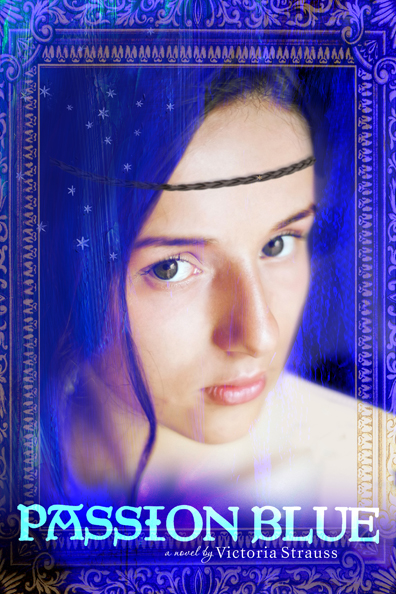
Passion Blue  
by Victoria Strauss

Hardcover

WINNER: ANNE HEINO


Be sure you know your true heart’s desire, or you may find yourself surprised by what you receive.

This is the warning the Astrologer-Sorcerer gives Giulia when she pays him to create a magical talisman for her. The scorned illegitimate daughter of a Milanese nobleman, Giulia is determined to defy the dire fate predicted by her horoscope, and use the talisman to claim what she believes is her heart’s desire: true love and a place where she belongs–not likely prospects for a girl about to be packed off to the cloistered world of a convent.

But the convent of Santa Marta is full of surprises. There are strict rules, long hours of work, and spiteful rivalries…but there’s also friendship, and the biggest surprise of all: a workshop of female artists who produce paintings of astonishing beauty, using a luminous blue mixed from a secret formula: Passion blue. Yet as Giulia begins to learn the mysteries of the painter’s craft, a forbidden romance beckons her down a path of uncertainty and danger. She is haunted by the sorcerer’s warning, and by a question: does she really know the true compass of her heart?

Set in Renaissance Italy, this richly imagined novel about a girl’s daring journey towards self-discovery transports readers into a fascinating, exotic world where love, faith, and art inspire passion–of many different hues.

Buy Passion Blue on Amazon
Find Passion Blue on Goodreads


IN STORES NEXT WEEK WITH AUTHOR INTERVIEWS


The Sweet Revenge of Celia Door
by Karen Finneyfrock
Hardcover

That's the day the trouble started.
The trouble that nearly ruined my life.
The trouble that turned me Dark.
The trouble that begs me for revenge.

Celia Door enters her freshman year of high school with giant boots, dark eyeliner, and a thirst for revenge against Sandy Firestone, the girl who did something unspeakable to Celia last year.

But then Celia meets Drake, the cool new kid from New York City who entrusts her with his deepest, darkest secret. When Celia's quest for justice threatens her relationship with Drake, she's forced to decide which is sweeter: revenge or friendship.

This debut novel from Karen Finneyfrock establishes her as a bright, bold, razor-sharp new voice for teens, perfect for fans of The Perks of Being a Wallflower and Will Grayson, Will Grayson.

Author Question: What is your favorite thing about The Sweet Revenge of Celia Door?

My favorite part of the book are the early scenes involving Drake and Celia, when they are getting to know one another. There is such a blossoming that happens when you make a true friend and I love getting to live out that feeling through the characters.

Order The Sweet Revenge of Celia Door on Amazon

View The Sweet Revenge of Celia Door on Goodreads


MORE RELEASES IN STORES NEXT WEEK


The Different Girl
by Gordon Dahlquist
Hardcover

Veronika. Caroline. Isobel. Eleanor. One blond, one brunette, one redhead, one with hair black as tar. Four otherwise identical girls who spend their days in sync, tasked to learn. But when May, a very different kind of girl—the lone survivor of a recent shipwreck—suddenly and mysteriously arrives on the island, an unsettling mirror is about to be held up to the life the girls have never before questioned.

Sly and unsettling, Gordon Dahlquist’s timeless and evocative storytelling blurs the lines between contemporary and sci-fi with a story that is sure to linger in readers’ minds long after the final page has been turned.

Order The Different Girl on Amazon

View The Different Girl on Goodreads


* * * *

The 39 Deaths of Adam Strand
by Gregory Galloway
Hardcover

Adam Strand isn’t depressed. He’s just bored. Disaffected. So he kills himself—39 times. No matter the method, Adam can’t seem to stay dead; he awakes after each suicide alive and physically unharmed, more determined to succeed and undeterred by others’ concerns. But when his self-contained, self-absorbed path is diverted, Adam is struck by the reality that life is an ever-expanding web of impact and forged connections, and that nothing—not even death—can sever those bonds.

Order The 39 Deaths of Adam Strand on Amazon

View The 39 Deaths of Adam Strand on Goodreads


* * * *

How to Lead a Life of Crime
by Kirsten Miller
Hardcover

A Meth Dealer. A  Prostitute. A Serial Killer.

Anywhere else, they’d be vermin. At the Mandel Academy, they’re called
prodigies. The most exclusive school in New York City has been training young
criminals for over a century. Only the most ruthless students are allowed to
graduate. The rest disappear.

Flick, a teenage pickpocket, has risen to the top of his class. But then Mandel
recruits a fierce new competitor who also happens to be Flick’s old flame.
They’ve been told only one of them will make it out of the Mandel Academy. Will
they find a way to save each other—or will the school destroy them both?


Order How to Lead a Life of Crime on Amazon

View How to Lead a Life of Crime on Goodreads


* * * *

Mind Games
by Kiersten White
Hardcover

Two sisters, bound by impossible choices, are determined to protect each other—no matter the cost.
James's frozen face melts into a smile. "Do you want to know the trick to getting in trouble under the watchful eye of a psychic?"
I think of the nailed-shut windows. I think of Clarice. I think of the two, the two, the two who are now zero. Tap tap. "Yes, I absolutely do."
"Don't plan it. Don't even think about it. The second you get an inkling of what you could do, do it then. Never plan anything ahead of time. Always go on pure instinct."
I smile. "I think I can do that."

Order Mind Games on Amazon

View Mind Games on Goodreads


* * * *

Crash and Burn
by Michael Hassan
Hardcover

On April 21, 2008, Steven "Crash" Crashinsky saved more than a thousand people when he stopped his classmate David Burnett from taking their high school hostage armed with assault weapons and high-powered explosives. You likely already know what came after for Crash: the nationwide notoriety, the college recruitment, and, of course, the book deal. What you might not know is what came before: a story of two teens whose lives have been inextricably linked since grade school, who were destined, some say, to meet that day in the teachers' lounge of Meadows High. And what you definitely don't know are the words that Burn whispered to Crash right as the siege was ending, a secret that Crash has never revealed.

Until now.

Michael Hassan's shattering novel is a tale of first love and first hate, the story of two high school seniors and the morning that changed their lives forever. It's a portrait of the modern American teenage male, in all his brash, disillusioned, oversexed, schizophrenic, drunk, nihilistic, hopeful, ADHD-diagnosed glory. And it's a powerful meditation on how normal it is to be screwed up, and how screwed up it is to be normal.

Order Crash and Burn on Amazon

View Crash and Burn on Goodreads