Thursday, 19 July 2012

7 Tips for Crafting a Believable Fantasy

A few weeks ago, we talked about the ingredients of a well-written mystery. Today, we're taking a look at what it takes to craft a fantasy readers can believe in. By definition, fiction includes many details that the writer creates. The tricky part is getting your audience to suspend disbelief. This can be even more difficult when writing fantasy. By earning the trust of the reader, you can weave in fictional elements that won't make them question the journey you're taking them on or the world you've built.
Here to help us break down writing fantasy is a master of the art-- author Leah Cypess. After selling her first story (Temple of Stone) while in high school, she gave in to her mother’s importuning to be practical and majored in biology at Brooklyn College. She then went to Columbia Law School and practiced law for almost two years at Debevoise & Plimpton LLP, a large law firm in New York City. She kept writing and submitting in her spare time, and finally, a mere 15 years after her first short story acceptance, she sold her first novel to Greenwillow Books (HarperCollins). If you haven't read her novels MISTWOOD or NIGHTSPELL, you are seriously missing out. She currently lives in Brookline, Massachusetts with her husband Aaron, a researcher and doctor at the Joslin Diabetes Center, and their three children. You can visit Leah’s website or find her blogging at The Enchanted Inkpot, or on Facebook and Twitter.

Tip #1: Make a world that's believable. Even though it's fantasy, that doesn't mean you can just make it up without considering rules and consequences. Your readers are willing to suspend disbelief and accept that the world follows these new fantasy rules, but that means *you* have to follow those rules.

Tip #2: Using tropes... I happen to love tropes, but they have to be used carefully. On the one hand, you don't (necessarily) want to have a stereotypical elf lifted straight from Tolkien, because people who have been reading fantasy for a long time might find it boring. On the other hand, if you call a creature an "elf" but it acts like a vampire, all you've done is confuse the reader for no reason. I like to stick to the basic trope but give it a twist...

Tip #3: Combining the real world with your fantasy world. Even though some people look down on it, I think there's some value to the Tolkienesque medieval-England-ish fantasy world: people are familiar with it, so you don't have to explain every single thing from scrap, which gives your more time to get on with telling your story. (Of course, this only works if your story fits that world; sometimes, it's better to create a new one.) I like to ground my world in as much historical reality as possible, since nothing is quite as realistic as real life, and to only diverge when it's necessary for my fantasy story.
Tip #4: Explain the world without info-dumps.” From the Enchanted Inkpot blog, author Hilari Bell:

“The best solution is to allow the information to come out in small bits, during the normal course of your plot. Include only the information the reader really needs to understand the action.”

Thanks, Leah! Excellent advice. Here are a few additional considerations—
  • Anchor the unfamiliar with the familiar via metaphors or descriptions.
  • Even if the characters are unconventional, they still have to feel human.
  • Show, don’t tell” has never been more important. Let your reader discover the world you’ve built.
Can you think of other considerations when crafting a fantasy? What are some of your favorite fantasy books and what makes them work? What annoys you when reading a fantasy? Please share to comments!

Happy writing,
Marissa

Wednesday, 18 July 2012

WOW Wednesday: James Mihaley on Writerly Miracles and Sticking to Your Guns

James Mihaley grew up in Door County, Wisconsin. He is a graduate of Brown University. His middle grade novel, ‘You Can’t Have My Planet But Take My Brother, Please’, about a boy who discovers humans are merely renting the earth and are about to be evicted, was recently published by Macmillan. He has generously offered up a copy of the book for a giveaway, which we will do on Friday. You can find him on Facebook and on a fun YouTube book trailer here.


Miracles and Sticking to Your Guns

by James Mihaley

My Own Miracle

I got an agent on a Monday. She gave my book to an editor at Macmillan on Tuesday. We sold it on Wednesday. I do volunteer work at the Children’s Hospital of Los Angeles. I’m part of the Literally Healing program, which believes in the healing power of children’s literature. I was walking through the front door into the hospital when I got an e-mail from my agent, Rosemary Stimola, informing me that Macmillan had acquired ‘You Can’t Have My Planet But Take My Brother, Please’. But here’s the craziest thing of all. It wasn’t until after I sold the novel that I actually learned how to write for children!

What the heck does that mean?

I came to writing ‘You Can’t Have My Planet But Take My Brother, Please’ from writing an adult literary novel, which I’m just finishing up. It took me a while to realize that there is a huge difference between writing for adults and children. Macmillan saw the potential in the book when they acquired it. They could see that I was funny and I had the voice down for my feisty thirteen-year old narrator, Giles. But it took months of revisions, under the guidance of two brilliant editors, Liz Szabla and Kate Eagan, for me to get a handle on the finesse and restraint that is required when writing for children. My book has a huge Eco-theme. You can’t bludgeon children with facts about environmental degradation. It will get lost on a nine year old. You have to figure out a way to get the point across while keeping the story fun and exciting. I think Peter Pan is the ultimate example of depth and humor in a children’s book. Every time I read it, I burst out laughing. And yet, there is something so profound at the core. This is what makes a classic. This is what we strive for, to write the best book we’re capable of. We do this by never being afraid to take chances.

Rolling the Dice

My book has aliens in it. I was committed to making them fresh and interesting. I decided to take some chances. My alien mad scientist, Dr. Melissa Sprinkles, invents a robot that can turn paper back into trees. That’s the kind of things mad scientists are supposed to do. But she also has a moveable face. When you’re talking to her, her face will start sliding down her body. So you really have to stay focused. Occasionally an eye will head north while the rest of the face goes south. Dr. Sprinkles is also obsessed with shoes. She comes up with her best ideas when she is out shoe shopping.
I have some monsters in my book called Kundabons. How do you keep a monster from being clichéd? Well, they have a cage attached to their bodies, which they use to store their victims. The cage is actually part of a Kundabon’s body, just like an ear or nose. The bars on the cage are lined with fine white hairs. When Giles sees a wart one of the bars, he freaks out. (Can you blame him?)
Another big gamble, in a completely different way, was including a girl in a wheelchair as part of Giles team that must clean New York City in one day in order to save humanity. My editors initially had reservations about this. They thought it might come across too heavy in a fun Middle Grade book for reluctant readers. They were thrilled with how it turned out. Navida’s role in my book, her importance especially at the end, is something I’m very proud of.

Fortunately my editors let me take risks. Sometimes they thought I was going a bit too far and would reel me in. But they always gave me the right to make the final decision on whether or not something got deleted.

Sticking To Your Guns

My editors made suggestions that almost always made sense. (You expect that when one of them worked on The Hunger Games!) However, if I didn’t agree with a suggestion, and if I felt in my gut that the line needed to stay in the book, I let them know and they respected this. I think it’s important to listen to your convictions. If you feel on a gut level that something needs to stay in the book then by all means keep it there. One of the dangers of a writers group is that you get bombarded with feedback. This is something to be wary of.

The architecture of your novel must come from your own heart, not the random thoughts of others sitting around a table.

Tuesday, 17 July 2012

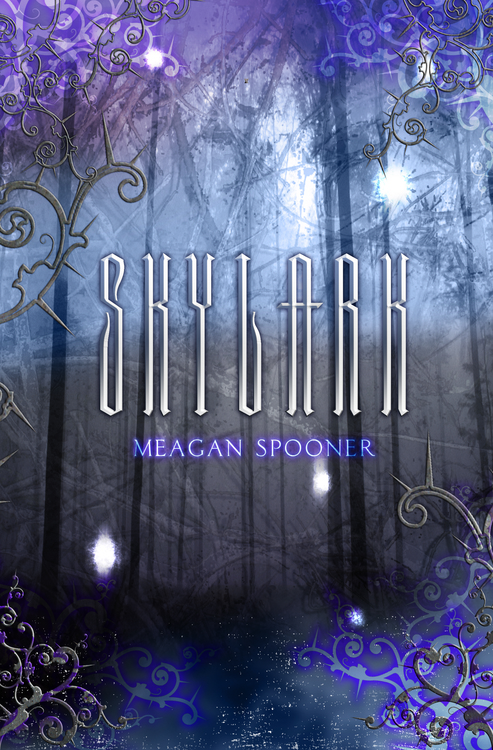
Owning Your Goals as a Writer and a SKYLARK Giveaway from Meagan Spooner

We're thrilled to have Meagan Spooner do a guest post for us today. Meagan Spooner won our very first contest here on the blog. Her wonderful book, SKYLARK, is coming out August 1 from Carolrhoda Lab/Lerner Books. She is also the co-author of THESE BROKEN STARS, forthcoming from Disney-Hyperion in Fall 2013.

Meagan currently lives and writes in Northern Virginia, and in her spare time, she plays the guitar, plays video games, plays with her cat, and reads. You can find her on her Website or her Facebook. You can also follow her on Goodreads or on Twitter.


Owning Your Goals
 by Meagan Spooner

I’ve never been a particularly organized person. I never made lists, I didn’t keep a calendar, and I never made concrete goals. Now I do all those things—not necessarily by choice, mind you. I think given half a chance I’d run off into the wilderness throwing my pages of to-do lists into the air, cackling madly. But in this business—because writing, if you want to be published, is a business—you’ve got to treat it like one.

A big part of that is the way you set goals. Ask an aspiring writer what their ultimate goal is and 9 times out of 10 it’ll be something like “Get published” or “Make the NYT Bestseller List” or “Castle it up like JKR.” But really, those are dreams, not goals. Dreams are good—they motivate us, keep was wanting things. But they’re not concrete, achievable goals. They tell you where you want to be—not where you need to go next.

And, if you’ll permit me to mix all kinds of metaphors in the same post, writing is kind of like walking through an unfamiliar wilderness. You may know where you want to go—civilization—but if you don’t have a map or directions or a compass, you ain’t gonna get very far.

So here are a few tips on how to set goals in a way that’ll actually get you moving, rather than daydreaming on rainy days about what you’d be doing right now if you were where you wanted to be.


Be in control of your goals.

You should only set goals for yourself that YOU can control. Ultimately, you don’t decide whether you get (traditionally) published, a publishing house does. You can do everything right, and still never get there. (I think it’s pretty unlikely, if you stick to it long enough, but that’s another blog post.) One of the most frustrating things about this industry is that there is so little that you, the author, can control. Like whether an agent will like your book, or whether the acquisitions team at Publishing House Alpha thinks you’re a good investment. It can be scary to contemplate, but instead of letting that stop you, give yourself manageable, controllable goals within a specific time frame.

Example time! Don’t say, “I am going to sell a book.” Instead, say, “I am going to finish my novel and query thirty agents by the end of the year.” See the difference? You can’t control whether someone buys your book, but you can control the amount of work you put into it. And make sure you set a (realistic) deadline for yourself.

Keep it bite-sized so you don’t choke!

Big tasks scare me. When I have something huge I have to get done I procrastinate like it’s my job, because just starting is overwhelming. And when it comes to big, overwhelming tasks, I can’t think of many that are bigger and more complicated than “get published.” But ignoring it the way I ignore my dirty dishes isn’t going to get you there. (It doesn’t make my dishes clean themselves, either.) So what I’ve learned to do is break big tasks into smaller pieces.

Example time! Using the example from the first tip, let’s make it even easier to swallow. Instead of saying “I am going to finish my novel and query thirty agents by the end of the year,” let’s look at some of the steps to achieving that goal. Make a list of smaller pieces, and give yourself deadlines for those, like so: “Write every day.” “Share with critique partners by the end of the month.” “Research a dozen agents this summer.” “Write first query letter draft next weekend.” It’s better to err on the side of smaller, obtainable goals, rather than more ambitious ones that risk overwhelming you. If all you can do right now is brainstorm for twenty minutes a day, then do that until you can build to achieving the next step on your list. 

Be specific.

I don’t know if you’re anything like me, but I’m really, really good at lying to myself. If I give myself any wiggle room, my subconscious runs away with it. If you tell yourself you’re going to work on your book every day, what does that mean? Does that mean writing? Does that mean researching? Does that mean looking up inspiration pictures on Pinterest? Technically all those things could be “working” on your book. But when you lift your head three hours later and realize you’ve been staring at pictures of brownies on Pinterest for the past half hour, you’re going to feel a bit defeated. And probably hungry, to boot.

So get specific. Narrow your goals, tell yourself exactly what you’re going to do and when. If working on the book, for you, means all of those things, make those separate goals. Don’t put actual writing with concept art research, because they’re not the same.

Example time! Taking our previous examples, we’re going to narrow them down further and make them even more helpful. Instead of saying “Write every day,” say, “Write at least 250 words of my current WIP every day until it’s finished.” Instead of saying “Research a dozen agents this summer,” say “Each week, make a list of the following info about at least one new agent: response time, genre specialty, other clients…”

 Most importantly, make sure you really want to move forward. I’ve had writers come to me asking for advice on how to get moving, only to realize as we start making plans that they’re not ready, that they actually want to be where they are—that they have dreams, but not goals yet. And that’s fine. That’s good. It means you’re self-aware, it means you know you’re not at the right point in your life. But if you are, when you are, setting goals like this will help you get there. Even if you’re not Type A (which holy goodness, I am NOT) trust me, it works. Even if you’re like me, and the very thought of making lists makes your skin crawl.

Finally, I’ll leave you with one last tidbit of advice. Find someone you trust to hold you accountable, when you set these goals. Eventually they’ll become habit, but until then, it’s okay to need some help. Willpower and determination doesn’t just grow on trees. And if you slip up and miss a day or a deadline? Don’t drown yourself with guilt. Tomorrow, if you’ll forgive the cliché, is a brand new day.


Meagan has graciously offered a signed copy of SKYLARK to one lucky winner. Just comment on this post to enter. Sorry, folks, this is only open to U.S. entries.

Meagan is also having a BIG giveaway on her blog, and that's open internationally and everyone who enters will win something. Here's the link: 


Monday, 16 July 2012

1st 5 Pages July Workshop Revisions Ready for Comments

Our July workshop participants have submitted their revised first five pages based on the input they received from each other and our guest mentors, Becca Puglisi and Sarah Ockler. This begins our next round of editing, and we need your help!

Please let the writers know how well the pages are working overall. What did you like? What didn't you like? Is the story moving quickly enough? Does it start in the right spot now? Does it capture your interest? What about the characters? Can you see them? Do you want to know them better? Do you want to spend a whole book's worth of time reading about them?

Let us know! This will be a big help for the writers, but it is also a great process for anyone interested in writing for young adults. See what you can learn from these authors and from the comments the entries receive. What do you agree with? How does your opinion differ? Why?

Happy reading and editing,

Martina and Lisa

1st 5 Pages July Workshop - Cook-Raymond Rev 1

Author: Sarah Cook-Raymond
Genre: YA urban fantasy
Title: THE DEFENDERS

Chapter One

Irony: the opposite of what you’d expect—with a twist.

Before today the only irony I knew was being tall but sucking at basketball. But that’s the twist. The day your life changes forever begins like all the others. It’s just the ending that’s changed.

Chapter Two: Before

Beep. Beep. Beep. Beep. I swat the alarm clock into submission but don’t move out from under the warm folds of down comforter. It’s not time to get up. Not really. Not yet.

I hear the wood stairs creek and croak under Shelly’s shoes. “Toby!” she says, with a knock on my door. “It’s time to get up!” Shelly’s two years younger than me but you’d never know it.
Goodbye, bed.

I let out a sigh and then grudgingly throw the covers off. At once I feel the sharp bite of cold air as it hits my body. I let a Guinness Book of World Record-setting yawns and make my way to the closet. “Mom!” I holler, staring at the very few items still hanging there. “I thought you said you were going to do some laundry!”

“I will dear. I will,” says the zombie in pearls walking by my room. She disappears around the corner offering no further details. Despite my mother’s grand appearances, mornings are her downfall. Apparently it’s genetic.

I let out an audible sigh then grab what used to be my favorite shirt and look in the mirror. I’m met by gray eyes and side-swept, shaggy, brown hair. But then I look down. “You’ve got to be kidding me,” I say to the reflection of a lanky boy in a midriff flannel.

I’ve grown so much in the last year that barely anything fits which means doing laundry is essential. Every time puberty rears its awful head, Mom insists appearances aren’t everything. She’s clearly a liar who never went to high school.

I turn my boxers inside out, grab a hoodie, the same jeans I wore yesterday, and hurry downstairs to the kitchen for breakfast.

“Hey Big Shot,” says Dad, looking up from the Washington Post. There’s a stack of five other papers beside him, all already read.

“Hey,” I echo. I don’t contest the nickname. He’s spent my entire life trying to get it to catch on. No need to stop now. Still, I love him for that. I can’t explain why.

The coffee pot dings. Dad smiles and stands up from the table. His massive frame is draped in his uniform: dark suit, shiny shoes, crisp shirt. I see a small splash of coffee still in his cup as he goes over for a refill—meaning this is the second pot of the day.

I look over and see Mom leaning against the counter typing away feverishly on her Blackberry, a half-eaten piece of toast balanced between two fingers. “Here,” Dad says, moving across the kitchen and sliding a steaming mug of coffee in her direction. She looks up and their eyes meet. “Thanks,” she says with a crescent smile as she puts the Blackberry down. She takes a sip and I watch her shoulders rise and fall into a relaxed soft sigh.

“Alright, Alright.” Shelly bursts into the room wearing a backpack so full it’s amazing she doesn’t buckle under the weight. “Let’s go. We don’t want to be late for school.”

“Speak for yourself,” I say, grabbing one of the strawberry Pop-Tarts in her outstretched hand. I take a satisfying bite. “I swear if it wasn’t for you, I’d never eat,” I admit.

“I heard that,” says Mom, though she doesn’t contest it. “I have an open house to prep for,” she says, turning to Dad.

“I wanted to take them to school anyway.”

I climb into his black Range Rover. “So you excited about that English test today?” Dad asks, starting the engine.

“Excited? I don’t think it’s possible to ever be excited about a test.”

“Toby,” he says, pausing. “Life is a test.”

“Can we please turn the radio non?” begs Shelly from the back seat. The rest of the way to school it’s a Shelly and Dad duet of some Taylor Swift song. Awesome.

Dad drops Shelly off at the middle school first. “You have a great day now,” he says. Shelly reaches from the back seat and gives him as big a bear hug as her scrawny little arms can handle.

“You too,” she singsongs.

When we get to the high school I quickly jump out but not before Dad calls my attention back. “So Big Shot, we still on for tonight?”

Tonight is fantasy football draft night. I’m the defending champ.

“You bet. But be ready, old man!” I holler back to him, my body still moving towards the school’s double doors. “You’re gonna need some luck!”

I bound off the bus thankful the school day is over and that’s when I see it—the sight that stops me in my tracks—Mom’s car in the driveway uncharacteristically early. It’s strange how something so trivial can feel so terrifyingly serious.

Cautiously I opened the front door, all the hairs on my body standing on end. Something’s not right; I can feel it in my entire body, right down to my bones. And then, on the kitchen floor, is my sobbing mother flopping around like a helpless fish out of water. It unnerves me in the same way horror movies do. It’s that sensation where I want to cover my eyes but can’t because something—compulsion or curiosity—stops me.

As a realtor, Mom’s all about fake smiles and pretty façades so to see this, not a stifled, Hollywood-type cry but a mess of tears and snot streaming together down her cheeks, unnerves me.

“Mom?” I ask cautiously as I approach her. I don’t see Shelly walk into the room but hear the squeak of her sneakers on the freshly-waxed floor as she stops abruptly at the sight I’ve only just begun to digest. Mom looks up at us from under red-rimmed eyes, her whole demeanor as fragile and breakable as ever. “Your father—” she eventually chokes out but breaks off. All that follows are blubbered incoherent words coupled with bouts of hyperventilation.

Precipice (n). I couldn’t remember the definition in class today. But I remember it now.

“Mom?” I repeat.

“He’s dead,” she says at last. My knees buckle and I collapse next to her. Shelly does the same. We’re just one big pile of bodies like football players in a heap only no one attempts to move and we don’t have any padding to cushion the blow.

At that moment tectonic plates begin to shift. We don’t feel them but we know they’re there, moving, cracking under the surface. The earth breaking in two, the before and the after, an ocean’s divide between them.

1st 5 Pages July Workshop - Lawson Rev 1


Name: J. Lawson

Title: Nooks & Crannies

Genre: Middle Grade Historical Mystery

Just past three o’clock in the afternoon, when schools across South London were releasing much-adored children by the bucketful, Tabitha Crum was let into the cold as well. She quietly dodged the usual groups that shoved and laughed their way through St. Augustine’s iron schoolgates. The cobblestone streets of Village Wiltingshire were made eerie and muted by a thick November fog, and clip-clopping carriage horses snorted up and down the street, emerging and fading within moments. Almost like ghosts, Tabitha mused. She made her solitary walk home, kept company by giddy, nervous thoughts of the unexpected delivery to Miss Morrow’s classroom.

She clutched and rubbed the pretty envelope, letting one fingernail linger at the seam. The two recipients had been given strict instructions by the messenger boy to pass the envelopes to their parents.

That, of course, did not keep her from an innocent scratch or two as she passed the village bakery, the candle shop, and a newspaper seller barking excitedly about something or other. The mysterious contents, sadly, were not inclined to be opened other than by tearing the paper.

“It’s as though they’ve sealed it together with spite,” Tabitha muttered to herself, earning an offended glance from a passing elderly lady. Whether it was the remark, her outgrown uniform, or a combination, Tabitha couldn’t be certain. Perhaps the woman was offended by children as a whole. Rather like her mum and dad.

To open it or not? If there was anything Tabitha loved, it was a mystery. But if there was anything she wanted, it was a bit of excitement. And if there was anything that she ached for, it was... a true sense of belonging. Ludicrous or not (one doesn’t find adventure or friendship or acceptance underneath maroon wax seals embossed with a duo of swans), it was impossible to ignore the miniscule possibility that the envelope might contain some remedy to both.

With a hand shaking both from chill and an unfamiliar amount of hope, she lifted the envelope to her nose and took a long sniff. It smelled faintly of flowers.

A summons from Scotland Yard to become an Inspector-In-Training.

An invitation from King Edward to attend a horse race.

Notification from a long-lost relative that actually wants me around and waxes poetically about how I will be seen as a child with merit, never as an imposition.

All unlikely scenarios, but enough to resist the temptation of tearing into the paper and ruining the illusions with an advertisement for tooth powder. Barely, though. More helpful in distraction was the vulgar bellow behind her. A passing bicycle veered close to the sidestreet and sprayed Tabitha with filthy water left by a midday storm.

 “Your envelope is bound to be a mistake—there’s no way she’ll let you in!” yelled a horrid and familiar voice. “Best to stay home, Drabby Tabby! I’ve heard the place is haunted, anyway, and the spirits are hungry for filthy, ratty girls like you.” Barnaby Trundle stuck his tongue out as far as it could go before disappearing around a corner.

Tabitha flushed and thought of exactly seven things that she would like to do to her classmate, one involving a rather nasty collision with a refuse wagon.

So, he’s opened his. According the Barnaby, her envelope was a mistake. Based on the boy’s foul nature, the contents were sure to be something quite good (despite the silly mention of vengeful spirits). Well done, Detective Crum.

There was a moment, one brief moment, where the act of disobedience hung in the air like a cupcake, waiting to be fetched and gobbled up. The envelope lifted, as though on its own accord, and Tabitha saw her finger rise. Carefully, deliciously, she held her breath and began a tiny tear at the corner.

And stopped.

She sighed regrettably, dropping the note to her side. It would have to wait for Mr. or Mrs. Crum.

Tabitha Crum, she scolded herself, you are incorrigibly, incurably good. You must either learn to be sneaky some day or not mind being caught. Otherwise, life will remain quite as grey as this day. A second voice crept into her mind, scolding back. But they’ll never grow to love you if you can’t even obey simple rules.

Tabitha reluctantly agreed with both of the voices and peered through the mist, occasionally testing it with her free hand, pressing and flicking at whiteness that always seemed to be just a step ahead.

It’s almost like something in a Professor Pensive novel, she thought. And next, a woman will appear, begging me to solve the mysterious disappearance of her third cousin’s potting shed.

Professor Pensive always knew the answers to puzzling questions. ‘Every curious situation leaves signs of its origin, Tibbs’ he was known to say to his portly partner, Timothy Tibbs.

It would be easier to deduce the contents inside a tea shop. Or anyplace warm. Professor Pensive always did his deducing in a corner booth of his favorite pub, tucked away near the a cheerfully blazing hearth, sipping port and chewing pensively on his pocket watch chain. Tabitha had no desire to drink port and no money to buy a pocket watch, but tea and a scone would be nice.

As though agreeing with the thought, Tabitha’s breath sent scone-shaped puffs of white into the fog. She nodded at Mr. Willoughby, who was seated in his usual spot at the front window table of Puddles Confectionary, receiving a cup of tea, two biscuits, and the afternoon paper. He always seemed to be somewhere along her path to and from school. Since learning his name last year, they had exchanged pleasantries upon passing.

She waved with her enveloped hand and he raised his eyebrows in concern as two passing men thoughtlessly bumped her to the ground.

“Two more letters are floating around somewhere!” one of them said. “Can you imagine? After all this time? And children, of all people…”

Mr. Willoughby stood, as though to rush outside and help, but she smiled brightly and shook her head. He went back to his paper reading.

Tabitha picked herself up, sighing at the dismissive Bumpers and at the memory of Barnaby’s last words. She was filthy. Skinny and filthy and knobby-kneed and wearing a raggedy coat, which probably placed her in the street urchin category to the general public. Red welts, courtesy of Barnaby’s daily spitballs, were still visible on the bit of bare neck visible underneath the short, blunt-scissored haircut her mother had been giving her once a month since her eleventh birthday.

A bath would be nice, but it wasn’t a Tuesday or Friday, which meant that she would do the best she could, washing her stained knees in the bathroom sink.

Upon arriving home, Tabitha noticed her father’s briefcase in the outdoor entryway. That was rather unusual for a Thursday at 4:00 in the afternoon.

And it wasn’t just his briefcase. One of her mother’s traveling trunks, a jewelry case, and a hat box were piled together as well. Had she been in a slightly more observant mood, Tabitha might have noticed that a horse-drawn cab was lurching down the road in her direction.

And she might have noticed that the envelope was no longer in her hand.

And she might have noticed that a man had been following her down the walkway for the last five minutes.

Instead, she reached her key into the lock. Just as she twisted the door knob, she was halted by an urgent tapping on her back. She turned, staring in astonishment at the face behind her.

1st 5 Pages July Workshop - Koon Rev 1

Author: Shelley Koon (Revision 1)
Genre: YA/ Dystopic
Title: Axiom


Imp reached back and slid the suits probe into her spinal port.  Grabbing her long dark hair she twisted it into a ponytail, pulled the stealth suit hood over it and tucked her hair inside.  She slid her gloves on and activated the suit.  Her body hummed with excitement as the sensors embedded in the fabric gathered data from her surroundings and sent it snaking through her nervous system.  Black and charcoal colored patches bloomed across the surface of the suit, resembling a long dead field of poppies.  They bled into one another until they covered every inch of the suit making it impossible to distinguish Imp from her surroundings.  She held her hand out and wriggled her fingers, straining to see them against the backdrop of the forest.
“Whoa,” she said to the dead trees that surrounded her.  They stayed silent, clearly unimpressed.

Defying orders to take it slow, she sprinted through the forest.  The suit shifted colors rapidly to match the passing scenery, forcing an extreme amount of data through her body.  The exhilaration of the tingling gave way to the unnerving sensation of a thousand tiny rats gnawing on her nerves.  Imp pushed harder until the world began to dim at the edges of her vision and her stomach felt like it might divorce itself from breakfast.  

She stopped and lurched over, palms resting against her thighs and gulped in air.  It tasted stale and stung her nose but it was a cool.  The air displaced the burning in her lungs and after a moment the lightheaded feeling slipped away.  Confident she wasn’t going to pass out; she began negotiations with her stomach about the fate of her breakfast.  This was not at all how she had envisioned starting her stealth suit training.

A few moments later Imp and her stomach had reached an agreement and she stood up slowly.  She stepped forward gingerly as if checking to make sure the ground was still solid and finding it sound took another step.  She had barely gone a foot when a horrible thought dawned on her.  She whipped her head around and surveyed her surroundings.  Had anybody seen her?  The area appeared to be clear but with a zone full of camouflaged trainees she couldn’t be sure.  She sighed, the last thing she needed today was to catch a load of flack from her fellow trainees.  She swore that some of them – O.K. most of them – took great pleasure in looking for and pointing out the tiniest mistake in her performance.  Not that that happened often, but she didn’t plan on handing them any opportunities.  She began slowly through the woods again, this time taking her time getting used to the data transfer. 


As she walked she tried to imagine what the transfer would’ve felt like when the forest had been alive.  She had seen pictures of the world before, lush and green with all the colors of the spectrum represented.  She shuddered at the thought of that running through her body.  But the world she lived in was dark, forest nothing more than a negative of itself.  The Great Wars had seen to that and the only time the forest ever looked green to her was in the dark, through her night vision contacts.

Lightning lacerated the sky overhead, followed by the rumble of thunder.  The storms came more often these days, but they never brought rain.  Even if they had, Imp wasn’t sure the ground was capable of being fruitful anymore.  There wasn’t much that thrived outside the base nestled inside the mountain.  Except those she had been trained her entire life to hunt.

 Imp reached up and flicked her headset on.  A series of numbers and letters streamed across the heads-up display embedded in the hood.
“Janip, you there?” Imp asked.

“Yep, where you been?” came Janip’s voice from her headset. “The other teams have their stats coming in already.  We’re falling down the ranking girl.”

 “Yeah, because the other teams are slackers and doing merges with these little trees down low.”

“So what’s the plan?”

“I’m going up hill to the big trees.”

“We were told to stay low and take it slow” Janip asked.

“No, we were told not to go high.  I’m not going high, just midway,” Imp snickered and then added, “and I promise to walk there slowly.”

“You’re impossible.”

Imp picked a rock up and rubbed it on the fabric next to her mic, “What I can’t hear you there’s a lot of static today.”

“Very funny,” Janip sighed.

Imp jogged up the hill and ticking through combat stances in her head, a trick she had learned in survival training for externalizing pain.  That seemed to help keep her mind off the data flow and the queasiness stayed at bay.  Several feet up the hill she made a quick right and headed toward a small grove of trees she had noticed on the map.  As she neared it, she caught a fleeting glimpse of something from the corner of her eye.  She stopped and turned toward the direction of the movement.  The backdrop of the forest rippled slightly.  Her hand fluttered to the empty holster on her belt.
“Jan, did you see that on your display?”  Imp whispered.

“See what?”

“I saw a…” she stopped mid sentence and frowned.  She hadn’t really seen anything.  “Like a ripple.”

“A ripple?”  Janip questioned.

“Yeah.  Like when you look at your reflection in water and then poke the surface and it ripples.”

Shifting her weight from one foot to the other to change her perspective, Imp continued towards the space where she had seen movement.  While she had a great respect for her commanding officers who had assured the trainees that the zone had been swept and locked down for training and there would be no need for weapons, she had an even greater respect for her intuition.  And right now hers was screaming that she wasn't alone.
“Probably someone having trouble with their stealth suit.  The system’s been kind of glitchy today and there are a couple of suits that aren’t reliably tracking.  I don’t see anything near you on the map,” Janip said.

Some of the tension relaxed from Imp’s body but her hand still firmly gripped the empty holster.  Over the past year five Slayers had disappeared while on duty, the most recent being Larkin.  Imp had no plans for being number six.  She continued to the grove, pausing a few times to check behind her.  Whatever had had seen seemed to be gone.  Perhaps Janip was right; it was just someone in a glitchy suit that had passed by.
Imp stopped just short of the grove as if she had hit an invisible wall.   Brow furrowed she stared at the grove trying to resolve what she was seeing.  She had assumed the large dark spots on the map indicated trees that were larger than those on the forest floor. But now, standing before them she could see that wasn’t the case. These trees, though much smaller, were positioned so closely together that it was difficult to distinguish one from the next.  Their branches entwined, twisted by the ancient winds and froze in time by petrifaction.  They reminded Imp of a group of survivors, clinging to one another for safety.  She supposed in some ways they were.  While the trees below had begun to crack and break, losing branches as the stone got too heavy for the trunk to support, these had managed to defy the years and remain as they were in life.  Stone monuments unto themselves.

“Are you seeing these?” Imp asked Janip.

“There’s no way you can do a merge to that.  I mean maybe by the end of the week we can give it a try when we’ve gotten more practice in…”

“I was fine on the way up here,” Imp lied, thankful she had waited to turn her headset on, “We’re doing it now.”

“No way.  Anything happens to you and it’s my ass that’s in trouble.  Well, yours and mine but yours will be dead, so I’m more concerned about mine.”

“Jan…”

“Why would you even want to try that?”

“There has to be eight to nine trees in that formation, the data stream is going to be gigantic.  This one merge will give us at least double the points the other teams get.  You were the one bitching about rankings earlier.  Are you in or not?”

Imp crossed her arms and looked further up the hill as she waited for her Navigator’s response. Her headset remained silent.  She noticed a smaller grouping of three trees a few yards away and crossed the short distance to get a better look.   The branches of this group were also entwined but, unlike the larger group their trunks were spaced further apart, allowing just enough room for Imp to wriggle between them.  A grin spread across her full lips.  Being the smallest of the Slayers had its advantages.